-1.png?width=600&height=450&name=Untitled%20design%20(8)-1.png)
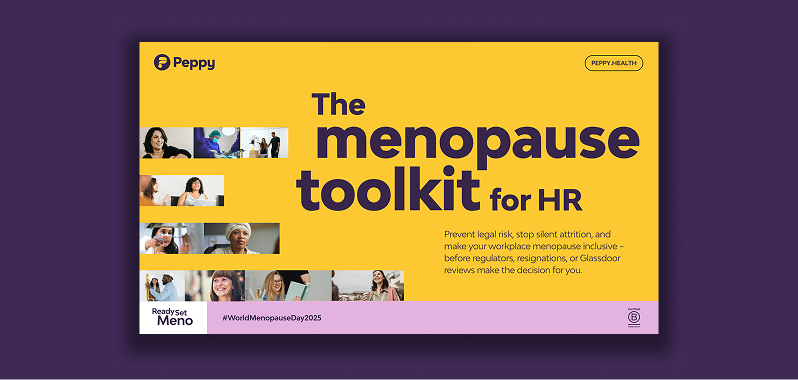


Since a French physician first coined the term in 1821 – and arguably as far back as the third century BC when the Ancient Greek philosopher Aristotle is believed to have studied the subject – mankind has known about the menopause.
- The earliest known references to menopause date back more than two millennia. Yet in all that time, the menopause has always been viewed as an issue that afflicts women. A defect that can be medicated or a phase that will pass.
- Symptoms have been dismissed as minor. Conversations on the matter have been discouraged. For too long women have had to suffer in silence. Or, worse still, been told to “man up” and get on with it.
- But now, as more people work later into their lives and industries begin to recognise the scale of the situation, the tables are finally starting to turn and investment is pouring into the relatively new field of “femtech”.
Here we explore why the menopause is no longer just a women’s issue and why it is increasingly becoming a mankind issue that will affect all of us – whether directly or indirectly – at some point in our lives.
So, why is it not just a woman’s issue?
Because the menopause is an equality issue
- Menopausal women are the fastest growing workforce demographic in the UK, according to the Office of National Statistics (ONS, 2018), and in October-December 2019 female employment reached a record high of 72.4% (House of Commons, March 2020).
- As these numbers continue to rise, employers – both male and female – are finally starting to recognise that the menopause is having a major impact on their workforce.
- “Five years ago, we wouldn’t even be talking about this,” says Kathy Abernethy MClinSci, RN, Peppy’s Director of Menopause Services and the outgoing Chair of the British Menopause Society. “In the past people just weren’t willing to talk about it."
- “But the #MeToo movement broke down a lot of those barriers. Women are now more willing to talk openly about issues they previously wouldn’t have done. They are now being allowed and invited to talk about these things. Sexual harassment was one of them. The gender pay gap was one of them. Menopause is another.”
Women in the workplace.
- In the UK, workplace discrimination based on gender or age is also illegal under the Equality Act. British Telecom found this out the hard way in 2012, when the courts ruled in favour of the plaintiff who was dismissed for under-performance despite providing a medical note showing their poor concentration was due to the menopause.
- As woman’s role and influence in the workplace continues to grow, calls for recognition of the impact menopause has at home and in the office are only going to get louder.
- Now, more than ever, reducing the stigma around the menopause and supporting employees through this major life transition inside and outside the workplace will be crucial to a business’ success.
- It will be fundamental to help close the gender pay gap (£528 median weekly earnings for women, £628 for men as of April 2019, ONS). Also to support diversity and inclusion targets in the workplace and enable everyone to fulfil their potential.
Because menopause will inevitably affect men too.
- In the UK it’s estimated that 13 million, or around 1 in 3 women, are either currently going through or have reached the menopause (Wales TUC. 2017). It affects all women at some stage in their lives, and for every person going through it, you can bet there’s a partner, family member or colleague indirectly affected too. Many of these will be men.
- And yet, generally in society, we have no idea how to talk about it. “Invariably, men will try to fix it,” says Kathy. “But women aren’t looking for their partner to fix it. They’re not looking for their manager to fix their symptoms.”
Supporting others.
- Think about your friends, family and colleagues. How many have been through a major life transition – marriage, pregnancy, bereavement, illness – at work? Did you support them personally? Were there pathways in place to provide help?
- The menopause is another of life’s major transitions. It will inevitably and naturally impact half of the world’s population, yet, at present, there aren’t the same pathways of support inside and outside of the workplace.
- “In the past there was nothing, absolutely nothing at all,” says Kathy. “There were no pathways for employers to provide support until you got to the point where you couldn’t do your job properly, went for a performance review and ended up with occupational health or human resources.”
- It’s why 59% of working women between the ages of 45 and 55 who experience menopause symptoms say it has a negative impact on them at work (CIPD). And why as many as one fifth of those who experience symptoms of the menopause – which in effect could account for 3.12 million of the current UK workforce – may consider leaving their job as a result.
Because it’s not just women who go through menopause.
- The menopause can be experienced by those who don’t identify as female. “Trans people, non-binary, gender fluid, these are all communities that have similarly been suffering in silence when it comes to the menopause,” explains Kathy.
- Insurance giants Aviva are paving the way in the corporate world on this front. In January 2020, Stonewall – the British charity advocating lesbian, gay, bisexual and transgender (LGBT) equality – ranked them 45th in their annual Top 100 LGBT-inclusive employers list, also recognising them as one of the UK’s top trans-inclusive employers.
- And this kind of recognition and sensitivity is crucial for the menopause cause too. According to Stonewall, more than a third of LGBT staff (35%) hide who they are at work, and you can be sure that segment will include people going through the menopause in secret.
TUC Survey
- A recent TUC survey of LGBTQ+ workers also found that almost half of trans people (48%) have experienced bullying or harassment at work by either a colleague, manager or client (Wales TUC. 2017).
- “Inclusive support for everyone going through the menopause is crucial,” says Kathy. “The more support you have, the easier someone will find it to deal with symptoms. Otherwise you can become very isolated, you become more anxious, and anxiety and stress only exacerbate symptoms.”
Reframing how the menopause is perceived in and outside the workplace
At Peppy, we believe the menopause should be seen as a long-term fluctuating health condition, which requires the same support as any other long-term health condition.Peppy's Santander pilot study
- In a pilot study with Santander UK, it was found just over half (51%) of employees weren’t confident talking about their menopause symptoms with their line managers, despite 56% reporting increased anxiety and 65% experiencing fatigue. The lack of understanding around the menopause in society has meant for too long people are suffering in silence.
- Yet after just four weeks using Peppy, of the 130 Santander participants, 3 in 4 said they felt more confident about their menopause journey. 3 in 4 also said they found their menopause symptoms less bothersome. 90% said they felt more positive about Santander as an employer.