-1.png?width=600&height=450&name=Untitled%20design%20(8)-1.png)


Men are more likely to delay seeking help for physical and mental health issues, influenced by personal behaviours and society. That pattern is well established and it has clear consequences at work.
When men access healthcare late, issues that could have been managed early often escalate into longer absences, higher treatment costs and sudden drops in performance. By the time support is accessed, employers are no longer preventing problems, they’re reacting to them.
How late intervention in men’s health shows up at work
Across the workforce, men tend to be more likely to:
- Downplay symptoms
- Avoid routine health checks
- Delay seeking advice until daily functioning is affected
For employers, this typically results in:
- Unexpected long-term sickness absence
- Crisis-led mental health interventions
- Late diagnosis of preventable or manageable conditions
- Reduced productivity in the months leading up to absence
Conditions such as heart disease, type 2 diabetes, prostate cancer and depression develop gradually. Warning signs are often present, but go unaddressed.
Men’s health risk at work go beyond mental health
Mental health matters. But focusing on mental health alone misses other high-impact men’s health risks affecting working-age employees.
- Cardiovascular health: High blood pressure and cholesterol often remain unmanaged for years, increasing the risk of serious illness and prolonged absence.
- Diabetes and metabolic health: Type 2 diabetes is slightly more common in men than in women. Fatigue, poor sleep and reduced concentration can affect performance long before diagnosis.
- Cancer: Men lack awareness of their personal cancer risk, there is no national prostate cancer screening programme, and too few men know that 4 in 10 cancers are preventable.
- Sexual and urological health: Erectile dysfunction, low testosterone and urinary symptoms are common and often linked to wider cardiovascular or metabolic issues, yet rarely discussed at work.
Why generic workplace benefits don’t change men’s health behaviour
Most employers already offer EAPs or general health benefits. These have value, but they aren’t designed around how men engage with healthcare.
Common limitations include:
- Reactive, not preventative, support
- Limited specialist expertise
- Short, one-off interactions
- Low sustained engagement
As a result, many men only engage with support when symptoms become unavoidable, at which point costs, absence and disruption are already rising.
What early, specialist men’s health support at work looks like
Men are more likely to engage with support that is:
- Easy to access
- Confidential
- Clinically credible
- Focused on prevention, not judgement
Expert-led men’s health support from Peppy includes:
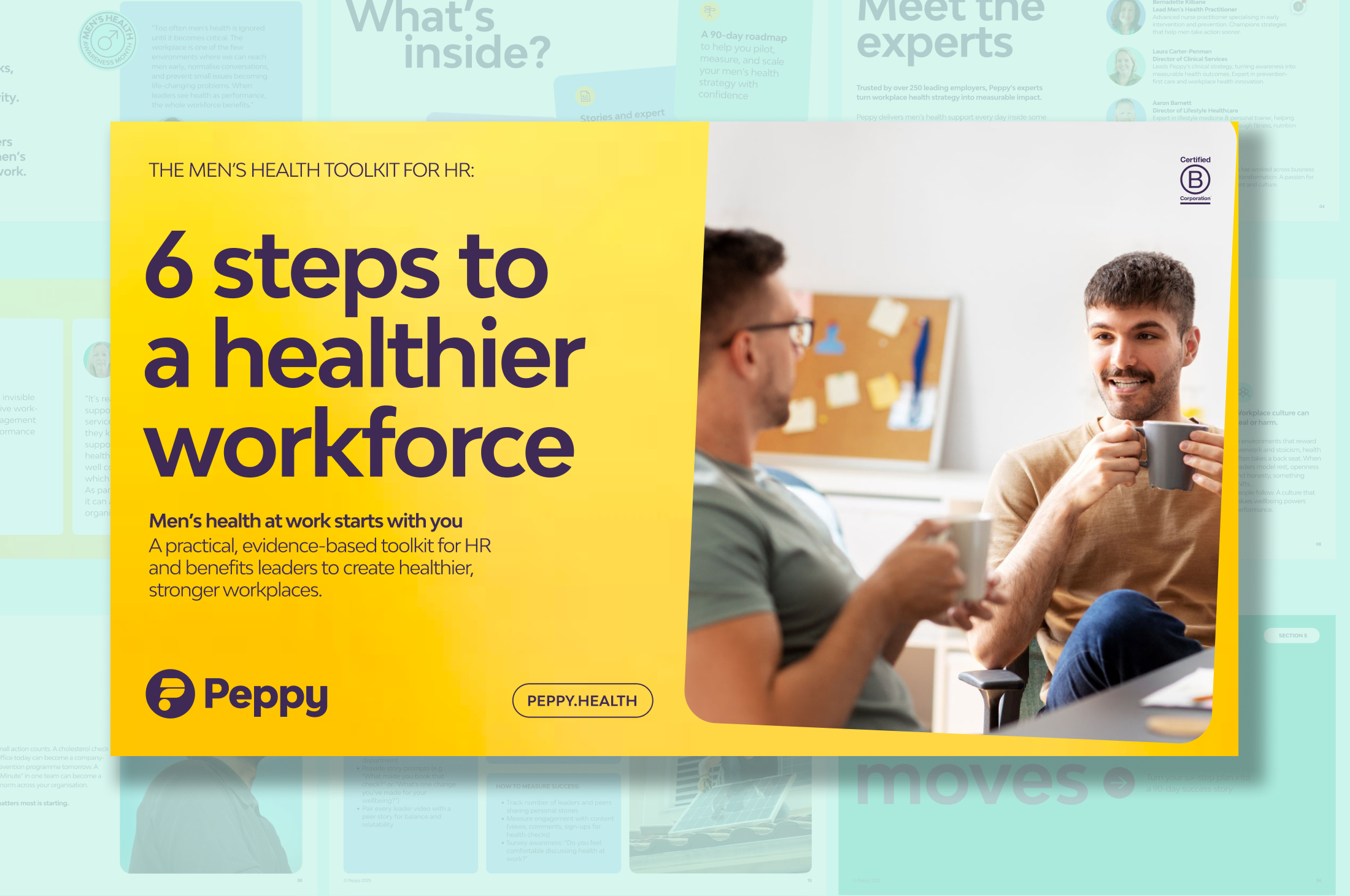
- One-to-one access to specialist clinicians
- Guidance on heart health, diabetes risk and cancer red flags
- Sexual and urological health support
- Mental health support including anxiety, stress, low mood, managing emotions, negative thinking, body image and relationship problems
- The convenience of a virtual MOT in addition to targeted testing and support, in areas men can face greater risk
Removing friction makes early intervention more likely and more effective.
The business case for acting earlier on men’s health
When men access the right support earlier, employers typically see:
- Fewer sudden, long-term absences
- Reduced presenteeism
- Lower downstream healthcare costs
- Higher engagement with benefits
- More stable performance in mid- and late-career roles
Early intervention shifts men’s health from a reactive cost to a preventative workforce strategy.
Final takeaway for HR and benefits leaders
Late intervention costs employers more than they realise, in absence, productivity and disruption. Early, specialist support changes that equation.
If you want to keep your employees supported and in work, get in touch.