-1.png?width=600&height=450&name=Untitled%20design%20(8)-1.png)


Absence levels have hit a record high of 9.4 days per employee. Most of it is preventable. HR teams are spending more than ever on benefits, yet the headline numbers on attrition, presenteeism and lost productivity keep climbing. The gap is not effort. It is timing. By the time a health issue shows up as a sick note or a resignation letter, the cost has already landed on your P&L.
This blog sets out why reactive care is failing HR teams, where the biggest losses are sitting, and what preventative health in the workplace looks like when it is done properly.
Why reactive health support is failing HR teams
Reactive care is expensive because it activates at the wrong moment. By the time an employee takes long-term sick leave or hands in their notice, the underlying issue has often been building for months or years. Symptoms get dismissed. Diagnoses get delayed. Performance quietly slides.
The cost of inaction is documented. Around 300,000 people leave the UK workforce each year due to preventable conditions. The economy loses an estimated £150 billion annually to health-related productivity loss. Replacing one employee can cost up to 150% of their salary. 68% per cent of employees work through illness rather than take sick leave, which means the absence data you do see is only part of the picture.
What prevention means in the workplace
Prevention is not about stopping health issues from happening. It is about catching them early enough that they do not become your organisation's problem.
You cannot prevent menopause. You can prevent your most experienced women leaving because of it. You cannot prevent fertility challenges. You can prevent the burnout, absence and resignation that follow when people feel unsupported.
In reality, that means four things:
- Acting before someone reaches breaking point
- Making support easy to find and easy to use
- Equipping line managers to have the right conversations
- Measuring health outcomes, not just benefit spend
This is the shift from fixing problems to stopping them getting worse. It is also where standard HR strategy is weakest.
The six health areas hitting business performance hardest
Five areas account for a disproportionate share of preventable cost. Each one has its own data, and each one is showing up in attrition lines that often go unexplained.
Menopause. One in four women consider leaving work due to menopause. One in ten do. The fastest-growing demographic in the workforce is women aged 45 to 55, and menopause-related absenteeism and presenteeism cost UK businesses over £10.5bn a year. This is talent loss at the senior end.
Fertility. One in six people face fertility challenges. 88% of employees would change jobs for fertility support. 38% of those undergoing treatment consider quitting altogether, and 90% of people struggling with fertility report feeling depressed.
Pregnancy and parenthood. 17% of women leave employment within five years of childbirth. One in five develop a mental health problem during the perinatal period. Just 17% of mothers feel confident returning to work after maternity leave. The risk window does not end when leave ends.
Women's health. Women are nearly two thirds (62%) more likely to feel unsupported at work for health issues than men. Endometriosis affects one in ten women and takes an average of eight years to diagnose. The cost shows up as repeated short-term absence in cyclical patterns that go unexamined.
Men's health. One in five men die before retirement age. Men are 32% less likely than women to see a doctor, and 40% have low testosterone affecting mood and energy. Silence here is expensive. By the time it surfaces, it is usually a crisis.
Neurodiversity. 1 in 7 people in the UK are neurodivergent. In a workforce of 10,000, that's approximately 1,500 employees without structured support. 43% of neurodivergent employees are likely to leave their current role. A number that drops significantly when tailored support is in place. 3x employees with ADHD are three times more likely to quit a job impulsively. And 60% more likely to be fired without the right support.
The ROI of getting prevention right
The numbers tell a clear story. Every £1 spent on wellbeing returns around £5.50. Organisations with preventative care access see a 35% reduction in presenteeism. Strong wellbeing strategies cut voluntary turnover by 19%, with attrition rates running 20% lower than average. Early lifestyle intervention reduces chronic condition risk by up to 80%.
Specialist support drives measurable change at the symptom level. Menopause-related work impairment drops by 15% within 90 days when employees get the right care. Severe menopause symptoms reduce by 58% at 180 days. These are not soft engagement scores. They are health outcomes that translate directly into hours worked, decisions made and people retained.
Knowing where the money is leaking is one thing. Knowing what to do about it is another.
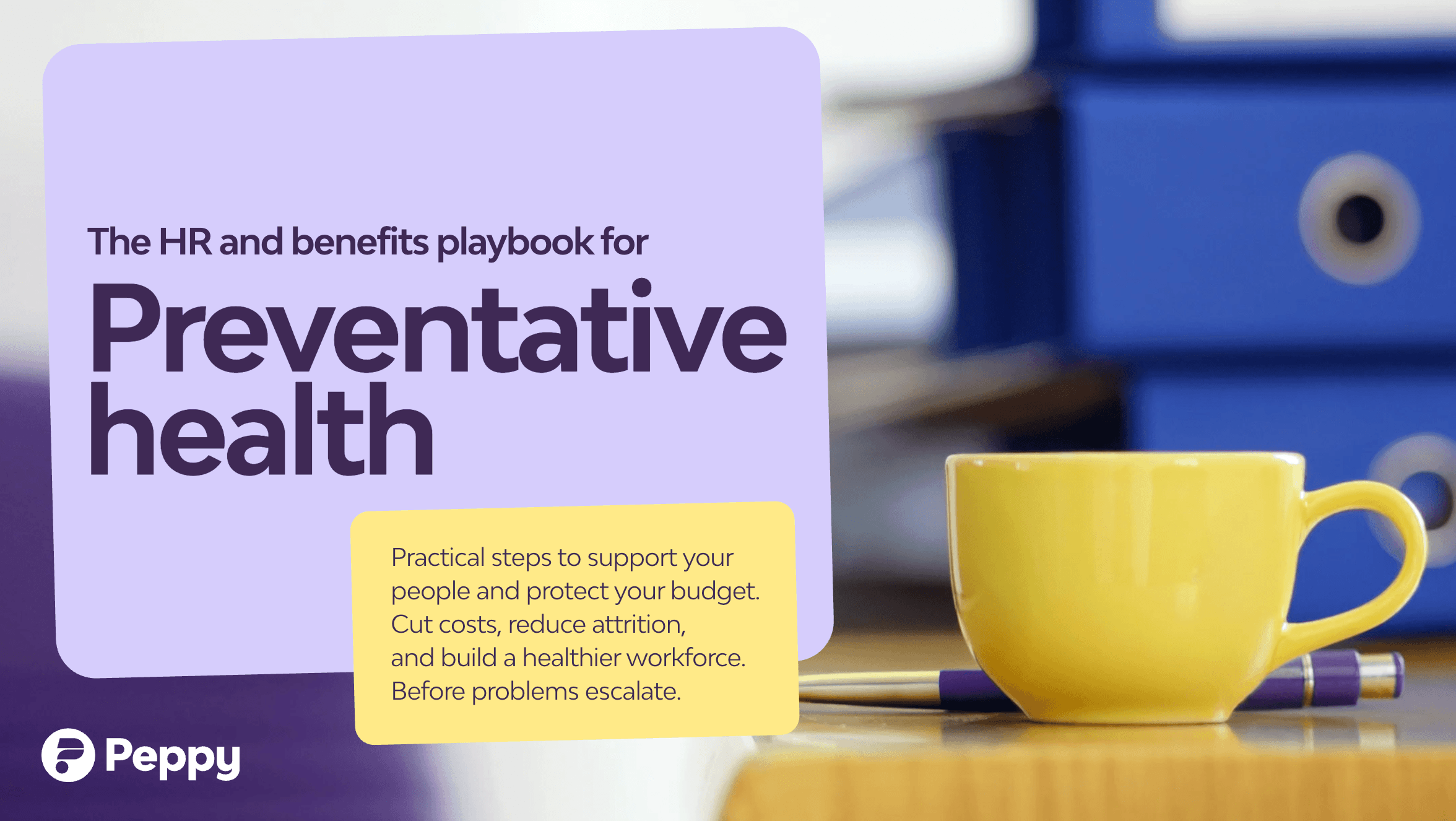
Get the playbook
The HR Playbook for Preventative Health is a free, practical guide built for HR Directors, Benefits Managers and People leaders working in organisations of 250+. Inside, you will find:
- A self-assessment checklist to identify the gaps in your current strategy
- A 30/60/90 day roadmap for embedding prevention across your workforce
- A four-step action plan for each of the five health areas covered: menopause, fertility, pregnancy and parenthood, women's health, men's health and neurodiversity
- The data points you need to build the internal business case
FAQ
What is preventative health in the workplace?
Preventative workplace health means identifying and addressing health risks before they escalate into long-term absence, reduced performance, or resignation. Rather than waiting for employees to reach crisis point, it involves early access to specialist support, equipping managers to spot warning signs, and building benefit strategies around the conditions most likely to affect your workforce, such as menopause, fertility challenges, perinatal mental health, and neurodiversity.
How much does poor employee health cost UK businesses?
Health-related productivity loss costs the UK economy an estimated £150 billion a year. Absence alone now averages 9.4 days per employee — a record high. Replacing a single employee can cost up to 150% of their annual salary, and around 300,000 people leave the UK workforce every year due to conditions that were preventable with earlier intervention.
What is the ROI of workplace wellbeing investment?
Research consistently shows that every £1 invested in employee wellbeing returns around £5.50. Beyond that, organisations with preventative health strategies see a 35% reduction in presenteeism, 19% lower voluntary turnover, and attrition rates running 20% below the sector average.
Why are standard employee benefits not enough?
Most standard benefit packages were designed for short-term or acute needs, not the ongoing specialist support required for conditions like endometriosis, perimenopause, postnatal mental health, or neurodivergent employees. The result is a gap between what employers spend and what employees actually need, which shows up in absence data, performance reviews, and resignation letters.
Which health conditions have the biggest impact on business performance?
The areas with the most disproportionate impact on absence, presenteeism, and attrition are menopause (costing UK businesses over £10.5bn a year), fertility challenges (88% of employees would change jobs for better support), pregnancy and parenthood (17% of women leave employment within five years of childbirth), women's health conditions such as endometriosis, men's health (one in five men die before retirement age), and neurodiversity (43% of neurodivergent employees are likely to leave without structured support).
What does a preventative health strategy look like in practice?
An effective preventative strategy has four components: acting before employees reach breaking point through early access to specialist care; making support easy to find and use; training line managers to have informed, confident conversations about health; and measuring health outcomes rather than just benefit spend. The goal is to shift from reactive cost management to proactive retention.
How can HR teams measure the effectiveness of their health strategy?
Look beyond absence rates. The most meaningful indicators are changes in presenteeism, voluntary turnover, time-to-return after absence, and condition-specific outcomes where specialist support is in place. For example, organisations providing menopause support see a 15% drop in work impairment within 90 days, and a 58% reduction in severe symptoms at six months.
What support should employers offer for menopause?
Effective menopause support goes beyond awareness campaigns. It includes access to specialist menopause clinicians, flexible working options, manager training, and a clear internal policy. Menopause-related absence and presenteeism cost UK businesses over £10.5bn annually, and one in ten women leave work altogether because of it — making this one of the highest-impact areas for any organisation with a significant proportion of women aged 45 to 55.
Are neurodivergent employees more likely to leave without support?
Yes. Around one in seven people in the UK are neurodivergent, and 43% of neurodivergent employees say they are likely to leave their current role. Employees with ADHD are three times more likely to quit impulsively and 60% more likely to be dismissed without appropriate adjustments in place. Structured, tailored support significantly reduces these risks.